

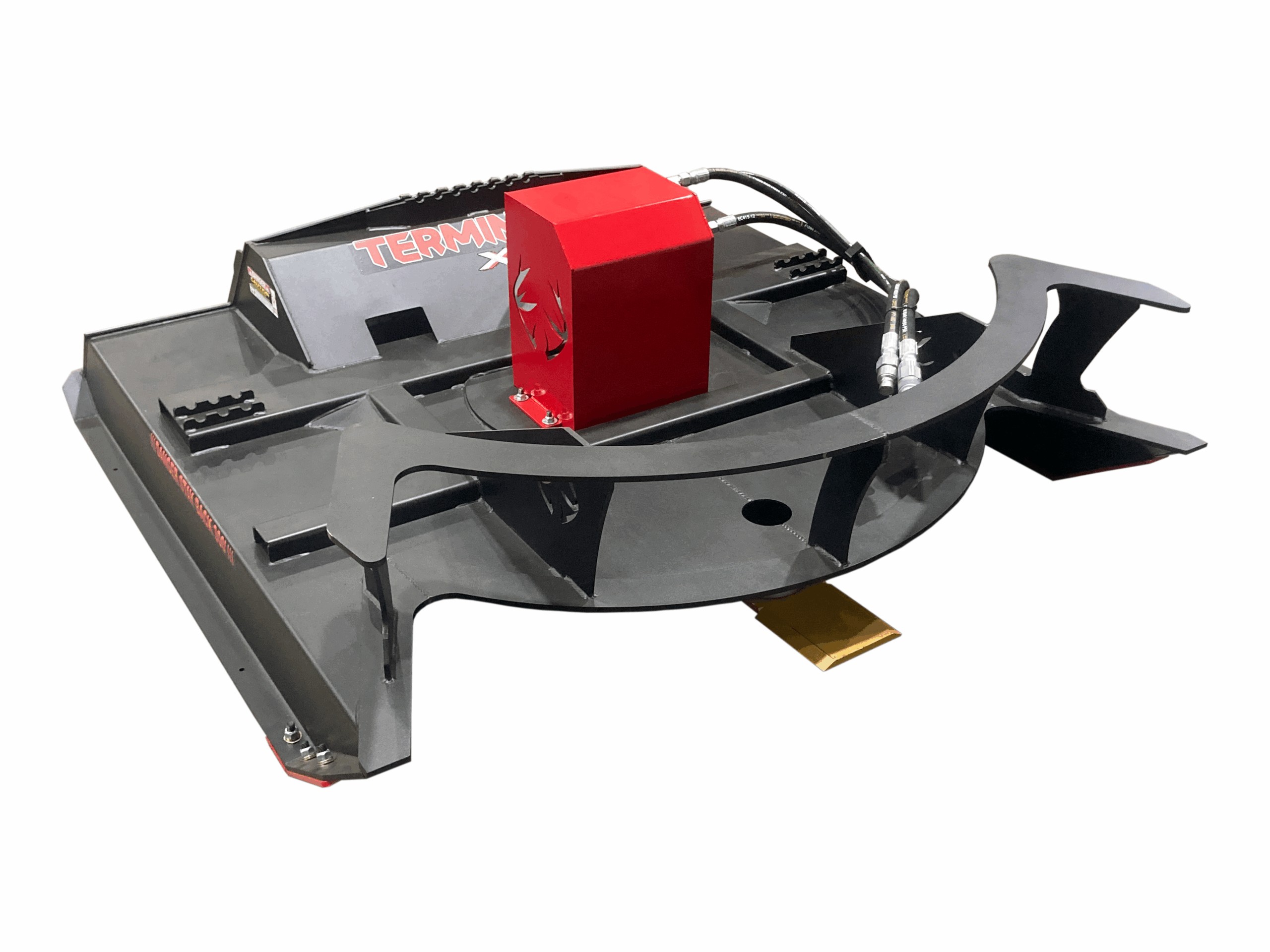
When customers call us about land clearing, right-of-way maintenance, or heavy brush control, one of the first things we ask about is their machine. The reality is simple: attachment performance starts with machine capability. If you’re searching for the best skid steer models for brush cutters and disc mulchers, you’re really asking which machines deliver the hydraulic power, cooling capacity, and durability needed to maximize productivity.
At Rut Manufacturing, we’ve worked with contractors, municipalities, and property owners across the country. We’ve seen firsthand how proper machine-to-attachment pairing makes the difference between smooth operation and constant downtime.
Not sure if your skid steer is properly equipped for a brush cutter or disc mulcher? Call us at 336-859-0328, and we’ll help you determine the right fit for your machine and application.
We get asked all the time which brand is “best.” The truth? Every major manufacturer builds capable machines. What matters most is whether the skid steer meets the hydraulic specs required for your attachment.
When evaluating the best skid steer loader brands for attachments, we focus less on the badge and more on:
If those specifications align with your attachment, you’ll get the performance you expect.
Horsepower is foundational. It supports hydraulic performance and ensures your machine can maintain cutting speed under load.
For most brush cutting applications, we recommend mid- to large-frame machines. When discussing skid steer horsepower range for disc mulchers, we typically advise 85 HP minimum, with 100+ HP preferred for sustained heavy-duty work.
Disc mulching, in particular, demands consistent torque and sustained power. Underpowered machines struggle to maintain disc speed in dense material.
Understanding high-flow vs standard flow skid steer hydraulics is critical when selecting attachments.
Hydraulic flow directly affects attachment speed. If you underpower a mulcher head with insufficient flow, you’ll see slower recovery times, stalling, and excess wear.
This is why understanding hydraulic GPM requirements for skid steer attachments is one of the most important parts of the buying process.
We often explain it this way:
Both matter. You can have high flow but insufficient pressure and still struggle under load.
When reviewing skid steer hydraulic specs for brush cutters, we ensure:
One area many operators overlook is skid steer cooling capacity for heavy-duty attachments.
Forestry and land clearing are continuous-load applications. Hydraulic oil temperatures climb quickly during mulching. Machines equipped with enhanced cooling systems or forestry packages handle extended runtime far better than standard units.
If you plan to run a disc mulcher for hours at a time, cooling performance is just as important as hydraulic output.
When discussing top skid steer models for forestry attachments, we regularly see strong performance from:
Each of these manufacturers offers models capable of running brush cutters and disc mulchers — provided the hydraulic package matches the attachment requirements.
Brush cutter requirements vary depending on design and intended material size.
For lighter pasture maintenance or property clearing, standard flow machines often perform well. However, for thicker brushes or commercial workloads, high-flow systems significantly improve efficiency.
If you’re unsure whether your machine meets the necessary hydraulic GPM requirements for skid steer attachments, we’re happy to review your specs with you.
Disc mulchers are more demanding than most brush cutters.
In our experience, high flow is typically required when:
When evaluating the skid steer horsepower range for disc mulchers, we strongly encourage contractors to avoid running at the bare minimum spec. Having excess hydraulic capacity improves longevity and performance.
High-flow systems help maintain disc speed under load, reduce stalling, and prevent unnecessary hydraulic heat buildup.
At Rut Manufacturing, we always recommend verifying:
Matching these specs ensures you’re operating within safe, efficient parameters.
Selecting the best skid steer models for brush cutters and disc mulchers isn’t about chasing the biggest machine — it’s about proper hydraulic alignment and real-world job requirements.
Our customers use brush cutters and disc mulchers for:
In every scenario, machine compatibility drives productivity.
Ultimately, the best skid steer models for brush cutters and disc mulchers are the ones that properly match attachment hydraulic demands, maintain cooling under load, and provide enough horsepower to sustain performance in tough conditions.
We encourage operators to review their hydraulic specs carefully before investing in forestry attachments. A properly matched setup increases cutting efficiency, reduces wear, and protects your equipment investment.
If you’d like help reviewing your machine specs or selecting the right attachment for your application, call Rut Manufacturing at 336-859-0328. Our team is ready to walk through your setup and make sure you’re equipped for success.Be sure to follow us on Facebook and Instagram for the latest industry news and updates.